When looking for an editor to polish your business communication or research paper, certain factors provide a good indication of professionalism and quality, like a long-term track record and a host of testimonials from satisfied clients. But there are also some attributes that are neither important nor valid, contrary to popular belief.
Myth 1: An editor must be a mother-tongue speaker of the language they work in
Being a mother-tongue speaker does not automatically mean that one understands the mechanics of the language. In fact, native language use often relies more on intuition, i.e. writing or editing based on what ‘sounds’ right. Native speakers often don’t know how to fix strategic structural gaps, because their knowledge mainly comes from patterns in everyday language use, rather than a firm understanding of the underlying rules and principles.
Non-native or multilingual editors likely studied the language in which they provide editing services, which means they have a clear grasp of the technical aspects like grammar and syntax. They are often better equipped to solve problematic text issues because they have a firm understanding of the available tools and how to use them. In addition, non-native speakers tend to be better at spotting and correcting local assumptions or cultural sensitivities to ensure inclusive and audience-centric language.
Myth 2: An editor must be a subject matter expert in the relevant topic
Every industry has its own jargon, operational context and technicalities. Many people consequently assume that an editor must have a qualification or direct industry experience in the relevant sector for them to be able to do a sensible edit. That is far from the truth.
Firstly, editors’ most valuable skills lie in understanding reader psychology, improving structure and flow and refining words and sentences to optimise readability and clarity. These skills apply across industries. In fact, having some distance from a topic can make it easier to spot gaps in logic or confusing phrasing. Good editors will research or query something they don’t understand – they won’t remove or change content at random simply because it is unfamiliar to them.
Secondly, many editors build up extensive industry-specific knowledge indirectly through their work. Even though they don’t have a formal qualification in, say, agriculture, they might have worked with agricultural content on numerous occasions, giving them a good understanding of the production value chain from farm to table, threats and opportunities, tools and systems used and so forth.
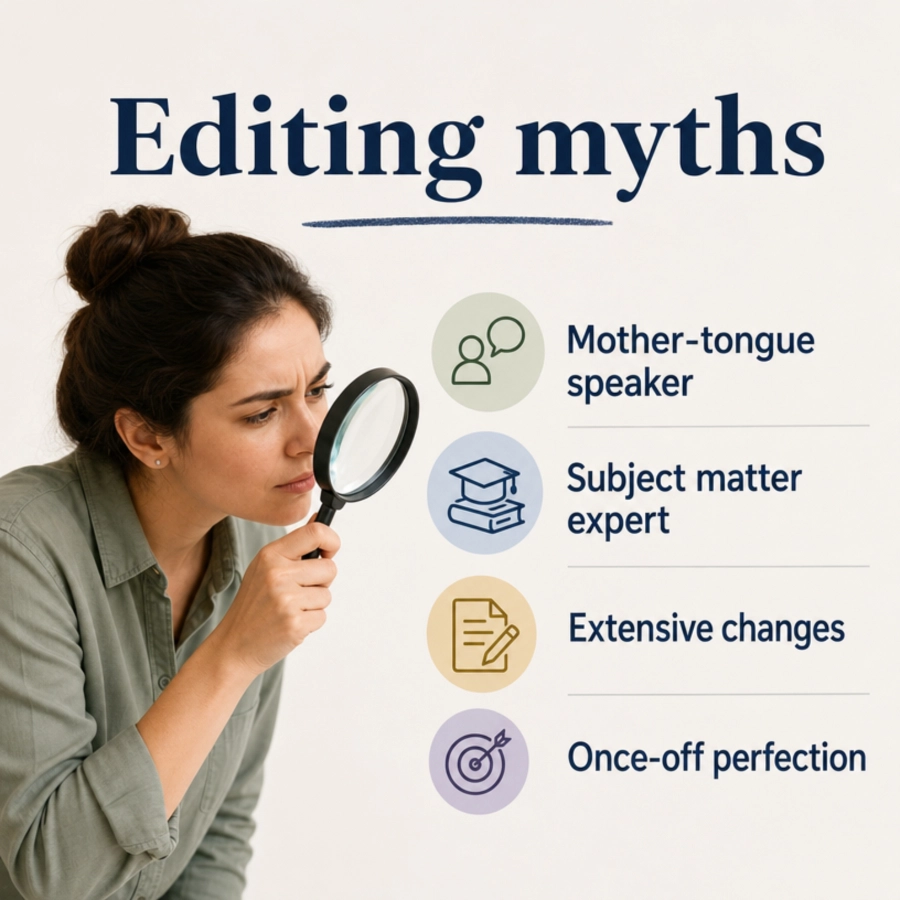
Myth 3: A good editor will make extensive changes
Although many authors dread receiving their draft content back from an editor covered in tracked changes, a sea of corrections and suggestions also creates the impression of a job well done. If there are only a few edits, the editor surely just skimmed through and didn’t do a proper job, right?
Wrong. A good editor is strategic about changing only those things that will correct, improve and enhance the text. They are committed to protecting the author’s voice and the authenticity of the text and practise restraint to avoid instilling their own voice or preferences. In many cases, a limited number of high-impact edits are much more effective than a bucketload of subjective changes aimed at showcasing the editor’s skills.
(An important caveat: If your brief to the editor was to do an extensive edit or if the editor flags substantial structural or inconsistent voice issues on their first review, this won’t apply.)
Myth 4: An editor should provide a perfect result in one round
Depending on the complexity and scope of the content, editing is often an iterative and collaborative process. If, for example, you are writing in your second language on a highly technical topic, chances are that the editor will have some questions about something like your intended meaning. Based on your feedback, the editor may make further changes or suggestions. Or if your document has high-level structural issues, the editor may first make changes like moving around sections and making suggestions for drafting additional content to fill gaps before they do a detailed edit where they look at things like grammar, syntax and punctation. This is why it is important to discuss your needs and expectations with the editor upfront and clarify the process.